Showing posts with label real estate. Show all posts

Thursday

How to Get More Real Estate Deals Tip 1: Legal Notices and Notice of Defaults

Legal Notices / Notice of Defaults

You can start to look for legal notices in small papers usually on weekdays. There are also legal newspapers in many communities that most of the general public is unaware of. Do a little research in your local community to find where you can find these free postings to prospect.

The County Records/Courthouse is another place to find these lists for free. Sometimes they can be a bit tricky to find so I'd recommend asking for help as soon as you get there.
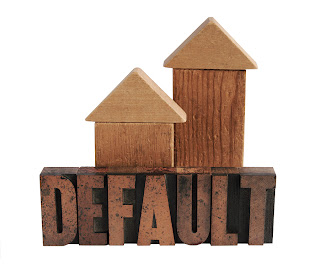
Real Estate Blog
The best place to go for the lists is the County Recorder’s Office or the County Clerk. Usually, there will be a computer or filing system that you can use to pull the most current recordings of default.

Purchasing NOD Lists: There are a lot of companies out there that can help you pull the list for you every day. These companies are great and they make your job a lot easier by pulling all the NODs for you as well as doing a reverse look up to find their numbers as well. Depending on the city of your choice you can find prices anywhere from $20-$140 per month.

If you decide to purchase these NOD lists it is important that they are selling you CURRENT filings. You do not want to be calling on NODs that are a month old. You also want to make sure that they include the Homeowner’s phone number. Some companies will sell you these lists without phone numbers. This is a big waste of time. Also, make sure they will send out new lists daily. You want to do your best to be the very first person to call the Homeowner. The early bird gets the worm. You will want this information as fast as possible every day.

For optimum results, combine your phone prospecting efforts with your mailing campaigns. Think about it... how powerful would it be to call or door knock a prospect AFTER they have already received a few of your marketing pieces. It will get you the deal every time and chances are no one else is doing it!

Make sure you track your NOD lists by date so that when you follow up on your mailings with a phone call or a door knock it is all organized in a manner to make your follow up easier. Write out your marketing plan for you list in advance and then follow it.

Remember...it can take up to 7 touches before you get the deal. Don’t stop short, keep calling, mailing and knocking your list.... The fortune is in the follow up!

Good luck, now go out there and get more deals.


To your success,

Oliver Graf
Real Estate Expert


Tuesday

Understanding the Real Estate Foreclosure Process (3 Steps)

In this market, housing values are declining as unemployment is increasing. For a homeowner, that means that the value of the house will be “upside-down”, and the market value of the home is actually less than the loan amount. Due to high unemployment we have seen a rise of foreclosures, where the bank takes back the property.

Foreclosure is the proceeding in which a bank or other secured creditor sells or repossesses a real property after the Homeowner has failed to comply with an agreement between the lender and the borrower (a mortgage or a deed of trust).

This happens when a property owner stops making their mortgage payments. After consistently missing payments the lender will usually consider the loan in default and begin with the foreclosure proceedings. The Lender at this point has the right to sell the property or even call the loan due.

All short sale / foreclosures have 3 steps in the timeline towards the property being sold.

1. Notice of Default (NOD):
A Notice of Default is a public notice given to the homeowner. In some states the notice is posted on the window or door. When a borrower is in default, or behind in mortgage payments, the lender will seize the home. In California lenders usually do not file an NOD until the homeowner is at least 90 days behind in payments.

2. Notice of Trustee Sale (NOTS):
A Notice of Trustee Sale is a public notice, published in a newspaper communicating a date for auction. This is also generally posted on the door; it will be a minimum of 21 days before the sale takes place.

3. Auction:
An auction is a public place where properties are auctioned to the highest bidder.


To your success,

Oliver Graf
Real Estate Expert


Wednesday

What is the Credit Impact of a Short Sale vs Foreclosure?


I was recently asked the question by a homeowner going into foreclosure…
What is the benefit of going into a Short Sale vs Foreclosure?
Although this is a question we get asked with nearly every client, this particular client wanted to know all the exact specifics. Since you are reading this now, you can probably benefit from the information that we found out when digging even deeper into the issue of what is the best option for most homeowners: Short Sale or a Foreclosure?
After doing all the research I am convinced now more than ever that the decision is a no brainer for most homeowners… A Short Sale is the OBVIOUS choice. Take a look at an email I sent to this client and see for yourself:

“Hope your doing well. We have been playing a little phone tag lately it seems, give me a call back when you get the chance.

After our conversations, you sparked an int
erest in me getting to the bottom of the question Short Sale vs Foreclosure?

Along with finding out great information on the mortgage debt forgiveness relief act:
http://realestateblog360.blogspot.com/2009/04/what-is-mortgage-forgiveness-debt.html

I also recently contacted Fannie Mae to get their latest guidelines as far as the exact credit impact of a Short Sale versus a Foreclosure, which I thought would be helpful to you in your research:

Short Sale: Fannie Mae refers to these as “Preforeclosure Sales” and requires only a 2 year waiting period after the sale, with acceptable re-established credit to re purchase.

Foreclosure: Standard minimum 5 years waiting period, with minimum of 10% down & 680 credit score for 7 years to re purchase. Primary residences only, no second homes or investment property loans for 7 years.

Take a look at the full report: https://www.
efanniemae.com/sf/guides/ssg/annltrs/pdf/2008/0816.pdf

Give me a call when you get the chance and we can discuss how you wish to move forward.”
Meaning: If the property owner goes through a Short Sale they will be able to purchase a home again in the next 2 years. A foreclosure on the other hand, they will have to wait at least 5 years!
The question is simple: Do you want to purchase a home again in 2 years or 5?
Who would want to do a foreclosure? Which do you think is better?
Contact me anytime for help or questions,
Oliver Graf
Real Estate Expert


*** Make sure you sign up for our FREE
mailing list today! ***


--
Real Estate Foreclosure
Real Estate Short Sale
Real Estate Avoid Foreclosure
San Diego Based Real Estate Blog